Hydropower Offers Major Investment Opportunity for Arunachal: CM Pema Khandu
Read Time:3 Minute, 23 Second
CM reiterates that SUMP PFR must precede any decision on construction
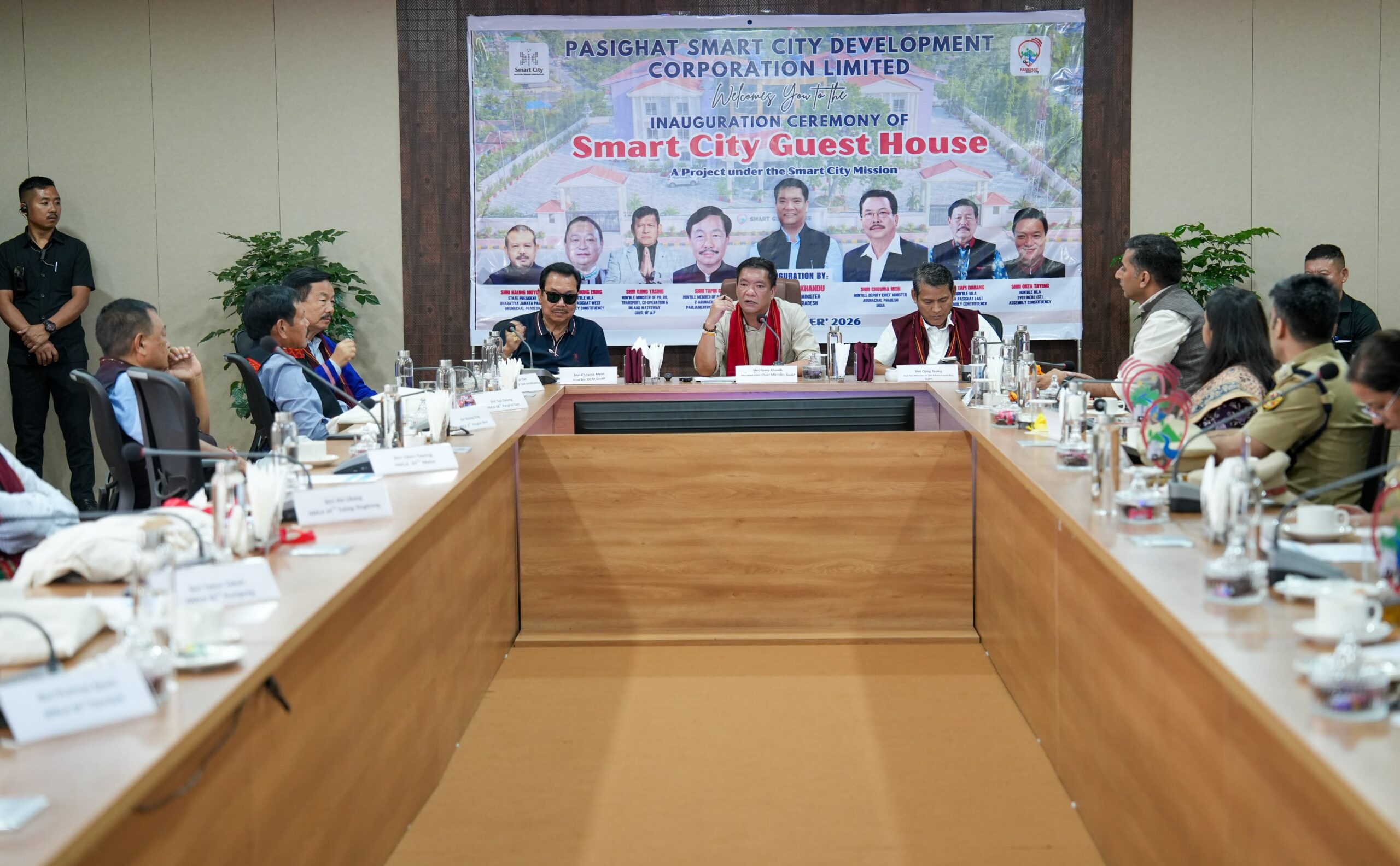
PASIGHAT, October 6 : Chief Minister Pema Khandu has described hydropower as one of the State’s biggest opportunities for large-scale investment and economic growth, stating that around 19,000 MW of hydropower projects are currently at various stages of development.
Speaking at an official function in Pasighat today, the Chief Minister said the State would continue to receive its 12 per cent free power share from hydropower projects. He further stated that the Government of India has agreed to facilitate a 26 per cent equity share for Arunachal Pradesh in hydropower projects.
Referring to the estimated 19,000 MW capacity under development, Khandu said the State’s equity contribution could be around Rs 15,000 crore, with the Government of India agreeing to support the State in this regard.
He said the 2,000 MW Lower Subansiri Hydroelectric Project is expected to be fully commissioned next year, which would provide the State with benefits through both its free power entitlement and equity participation.
The Chief Minister also highlighted the growth of Arunachal Pradesh’s economy, noting that the State Budget has increased from around Rs 12,500 crore in 2015 to approximately Rs 40,000 crore at present. He said expanding investments and strengthening State-owned resources would further contribute to the State’s economic growth.
SUMP: PFR is the Immediate Requirement
On the Siang Upper Multipurpose Project (SUMP), Khandu reiterated that the immediate requirement is to undertake the Preliminary Feasibility Report (PFR) and clarified that no final decision on construction should be taken before completion of the prescribed technical, environmental and legal processes.
He stressed that SUMP should not, at this stage, be viewed merely as a hydropower project. According to the Chief Minister, one of the key considerations is to examine the possibility of creating a mechanism for addressing potential water-related risks and establishing a controlled system for managing water flows.
He said that after completion of the PFR, detailed studies and statutory processes, including Social Impact Assessment (SIA) and Environmental Impact Assessment (EIA), would have to be undertaken as required under the law.
Khandu emphasized that technical experts would be required to address concerns and questions relating to the project, while people from potentially affected areas would have the opportunity to raise their concerns and participate in the consultation process.
“Until and unless we are satisfied, this project cannot go ahead,” the Chief Minister said, stressing the importance of informed public participation and factual information.
The Chief Minister said the State Government would keep its offices open for delegations and discussions on SUMP. He invited representatives and stakeholders to meet the government, make presentations, seek clarifications and place their concerns before the appropriate authorities.
He also said efforts would be made to disseminate information regarding the project in the Adi language through social media, so that people can better understand the project and the processes involved.
Khandu maintained that SUMP is a project of national importance with strategic implications, particularly in view of Arunachal Pradesh’s geographical location along the international borders.
The Chief Minister also referred to concerns relating to possible water diversion and sudden release of water from upstream areas, stressing that such issues require detailed technical examination.
At the same time, he highlighted the need for long-term measures to address recurring floods affecting communities in the Siang belt.
He said these concerns, along with the project’s potential impacts and benefits, would have to be examined scientifically during the feasibility and subsequent assessment processes.
Khandu reiterated that the immediate issue before the State is the preparation of the PFR, and not an irreversible decision to construct the dam.
He appealed to the people to allow the technical process to establish the facts and thereafter participate actively in the statutory consultations and decision-making processes.
The Chief Minister assured that the State Government would continue to facilitate dialogue and ensure that concerns raised by the people are heard and examined through the appropriate institutional and legal mechanisms.


Happy
0 %

Sad
0 %

Excited
0 %

Sleepy
0 %

Angry
0 %

Surprise
0 %
 0
0
 0
0