JOURNALISM IS NOT ACTIVISM; IMPARTIALITY & ACCURACY MUST PREVAIL: KARMA PALJOR
Read Time:2 Minute, 13 Second
Itanagar, November 14 : East Mojo Editor-in-Chief and Ramnath Goenka Excellence in Journalism Award recipient Karma Paljor has emphasised that journalism must remain rooted in accuracy, impartiality and professional ethics, cautioning journalists against mixing activism with their professional responsibilities.
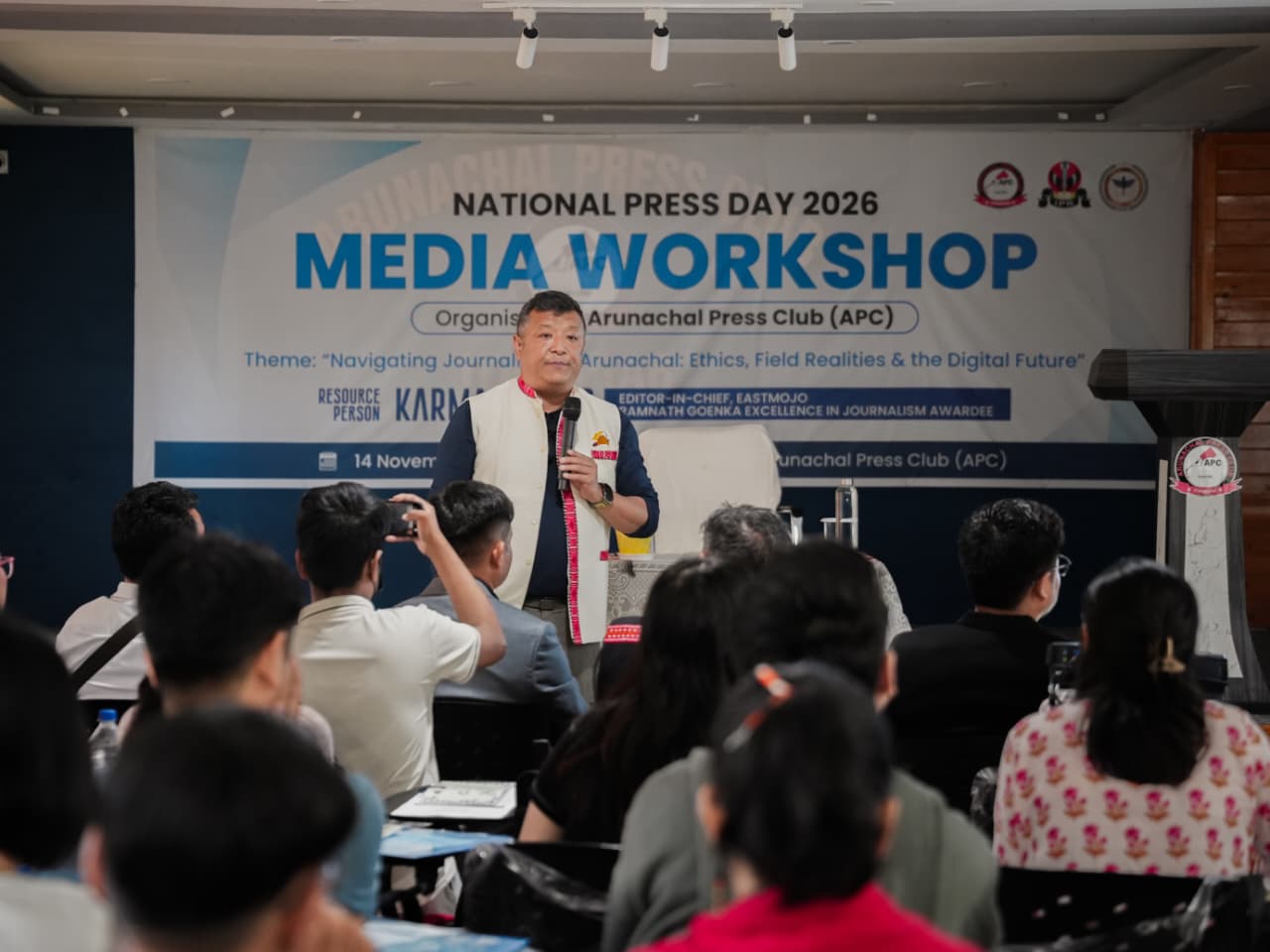
Addressing mass communication students and working journalists at a workshop titled “Navigating Journalism in Arunachal: Ethics, Field Reporting and Digital Future” on Saturday, Paljor said social media has not replaced journalism but has significantly transformed the media landscape, making it essential for journalists to rebuild public trust through accurate reporting, consistent work and meaningful engagement with communities.
Highlighting the factors contributing to declining public trust in the media, he identified inaccurate reporting, perceived political bias, sensationalism, commercial pressures and the growing gap between news organisations and communities as major concerns.
Cautioning against the growing race to break news first, Paljor stressed that speed should never come at the cost of verification and accuracy.
“Being wrong is more damaging than being late,” he said, urging journalists to thoroughly investigate and verify claims, allegations and controversial developments before publishing them.
He also highlighted the challenges posed by the democratisation of information through social media, where anyone with a smartphone can publish and circulate content without necessarily having journalistic training or professional accountability.
Referring to the theme “Everybody is a reporter, but is everybody a journalist?”, Paljor said that sharing information and practising journalism are two different things, with the latter demanding verification, accountability, fairness and adherence to ethical standards.
He further cautioned journalists against assuming dual roles as journalists and activists, stating that the two professions operate with different objectives.
“They should serve either as journalists or as activists, but not both. Activists have their own agendas, whereas journalists should maintain an impartial position,” he said.
Paljor also discussed the growing application of artificial intelligence (AI) in newsrooms, highlighting its potential, ethical implications and limitations. He stressed that emerging technologies must be used responsibly without compromising journalistic integrity.
The workshop was organised by the Arunachal Press Club (APC) at its conference hall in Itanagar as part of the National Press Day celebrations 2026.
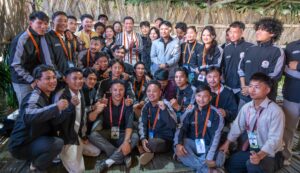
Students from the Mass Communication Departments of Dera Natung Government College (DNGC), Itanagar, and Rajiv Gandhi University (RGU), Doimukh, along with working journalists from across the state, attended the programme.
An interactive question-and-answer session followed, during which participants raised issues concerning the changing media landscape, professional challenges and the future of journalism.
Earlier, Arunachal Pradesh Union of Working Journalists (APUWJ) president Dodum Yangfo felicitated Paljor, while APC president Amar Sangno delivered the welcome address and expressed gratitude to the resource person for sharing his experiences and insights with the participants.


Happy
0 %

Sad
0 %

Excited
0 %

Sleepy
0 %

Angry
0 %

Surprise
0 %
 0
 0