National Conference on Digi-Tribidentity 2026 Begins at Rajiv Gandhi University
Read Time:2 Minute, 32 Second
Rono Hills, November 2: A two-day interdisciplinary national conference, Digi-Tribidentity 2026, organised by the Department of Mass Communication, Rajiv Gandhi University (RGU), in collaboration with the Department of Mass Communication, Saint Claret College (Autonomous), Ziro, and supported by the Indian Council of Social Science Research (ICSSR), North Eastern Regional Centre, Shillong, commenced at RGU, Doimukh, on Monday.
The conference, themed “Digital Frontiers and Indigenous Voices: Navigating Tribal Identity in the Age of Social Media,” brings together academicians, researchers and scholars from various institutions to deliberate on the role of digital media in shaping indigenous identity, preserving cultural heritage and strengthening communication. The event is being conducted in a blended mode, allowing both in-person and online participation.
Delivering the inaugural address, RGU Vice-Chancellor Prof. Shivaraj highlighted the rich cultural and linguistic diversity of Northeast India and emphasised the role of digital technology in preserving indigenous heritage. He noted that digital platforms provide tribal communities with opportunities to showcase their traditions and connect with wider audiences, while cautioning against the loss of distinct cultural identities.
He encouraged tribal youth to develop digital skills while remaining rooted in their cultural traditions. He also stressed the importance of ethical research, cultural sensitivity and responsible digital communication, calling for interdisciplinary approaches to address emerging challenges in the digital world. He formally declared the conference open.
Guest of Honour Dr. Fr. Alwyn Mendoz, Principal of Saint Claret College, Ziro, reflected on the growth of Mass Communication education in Arunachal Pradesh and highlighted the increasing influence of digital media and social networking platforms in shaping public narratives, education and communication. He also drew attention to their positive and negative implications.
Special Guest Shri B. B. Sharma, IIS (Retd.), former Director (News), All India Radio, Imphal, appreciated the relevance of the conference theme and the initiative to bring scholars together to discuss digital media, cultural representation and identity. He also emphasised the importance of national belonging and inclusiveness in communication.
Delivering the keynote address, Prof. Irene Lalruatkirmi, Head of the Department of Mass Communication, Mizoram University, highlighted the relationship between culture, communication, technology and social justice. She observed that digital platforms offer indigenous communities, particularly younger generations, opportunities to document and promote their cultural identities while challenging stereotypical representations of Northeast India.
She further stressed the need to bridge the digital divide and ensure greater participation of indigenous communities, particularly women, in digital spaces. Raising concerns over ownership, consent, preservation and ethical use of digital archives, she called for decolonising knowledge and encouraged researchers to work closely with indigenous communities to ensure their voices and perspectives are represented responsibly.
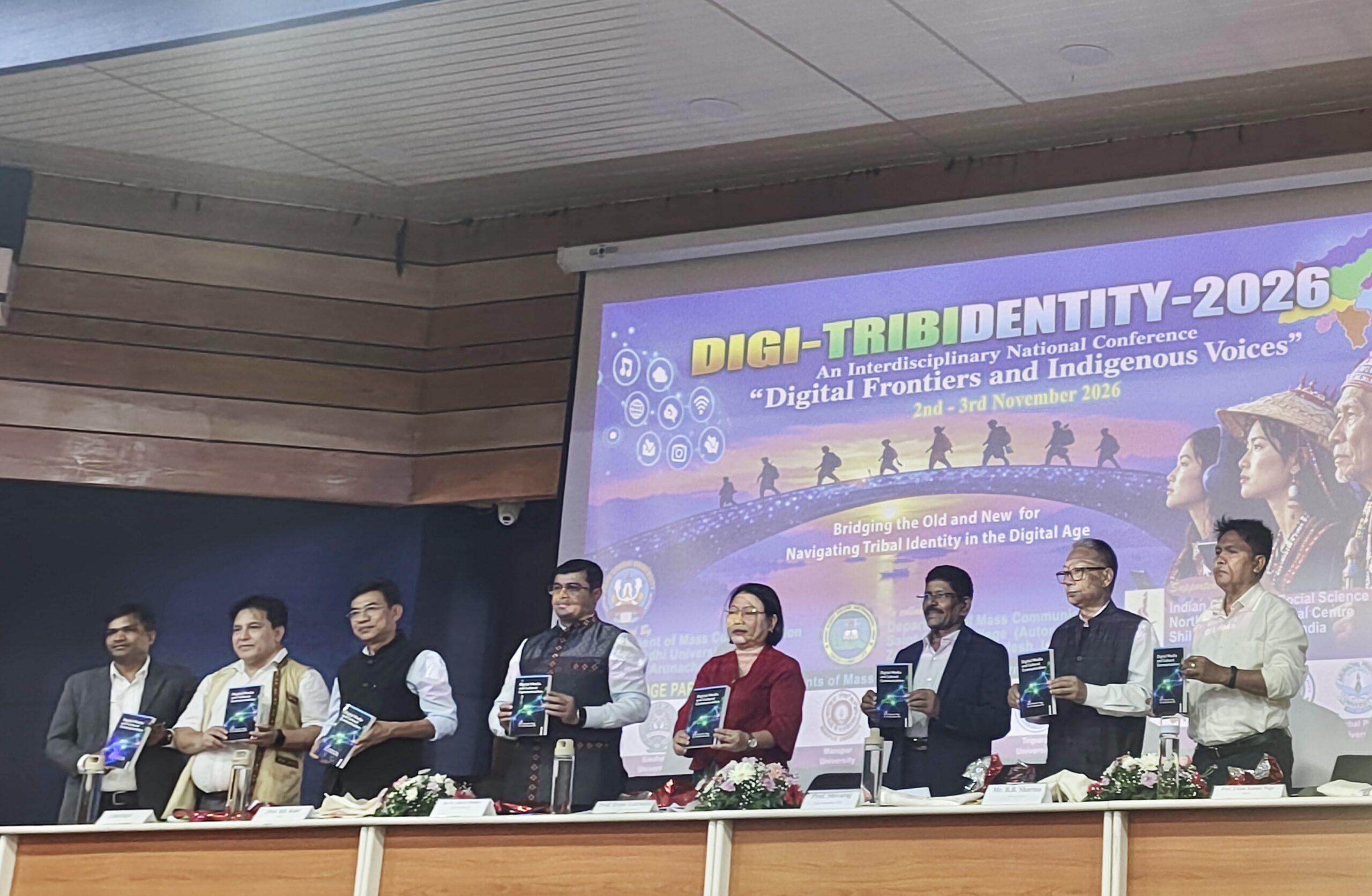
The inaugural programme also witnessed the release of the book “Digital Media and Cultural Communication.” Speaking on the occasion, Dr. Arvind Kumar Pal highlighted the growing significance of social media in research, academic activities and contemporary communication.
The two-day conference is expected to provide a platform for meaningful academic discussions, research presentations and exchange of ideas on the evolving relationship between digital technology, indigenous knowledge systems and tribal identity.


Happy
0 %

Sad
0 %

Excited
0 %

Sleepy
0 %

Angry
0 %

Surprise
0 %
 0
 0